
This article is part of our three-part Gratitude Series on improving donor retention through intentional, relationship-centered stewardship. In this series, we walk through the three pillars of a strong donor experience:
Part 1: Identifying your Audience Groups so gratitude feels personal rather than generic
Part 2: Choosing meaningful touchpoints that meet donors where they are
Part 3: Tracking and sharing the work so gratitude becomes a sustainable team rhythm
Use this series to build or strengthen a gratitude system that makes donors feel valued, connected and eager to stay engaged.
In a landscape with roughly 1.5 million 501(c)(3) nonprofits, people have endless choices. Volunteers, donors and board members stay when they feel two things every time they interact with an organization:
“I made a difference.”
“They noticed.”
The key to making them feel this way? Creating intentional touchpoint journeys – a timeline of interactions that ensures every supporter feels seen, valued and connected to your mission.
Think of it as a roadmap: each touchpoint is a step in a meaningful conversation with your donor, showing them how their contribution matters and how it drives real impact. As mentioned in Part 1, each Audience Group has unique motivations and expectations. By mapping out a timeline of interactions, you meet your donors where they are in their journey with your organization, guiding them from initial interest to long-term commitment.
Effective touchpoint journeys are built around three key elements: 1) when the touchpoint is sent, 2) what it says and 3) who delivers it. In the sections below, we’ll walk through each element and show how to use them to craft a donor experience that is personal, consistent and retention-focused.
1. When the Touchpoint is Sent
Donor retention isn’t just about words—it’s about timing. First-time donors who received a personal thank you within 48 hours are 4x more likely to give a second gift (McConkey-Johnston International).
Before deciding what each touchpoint will be, determine when and how often you’ll engage donors. In addition to adding every donor to your newsletter list (yes, even your long-term champions benefit from regular updates!), a simple cadence that applies to all Audience Groups could look like this:
- Immediate: 48-hour personalized thank-you
- Short-term: Follow-up within 1–2 weeks
- Medium-term: One-month update
- Milestones: 3-month check-in, 6-month gratitude story, anniversary recognition
This framework ensures donors feel noticed and appreciated, while giving your team a clear rhythm for communication.
Tip: Aim for at least six meaningful touchpoints before asking for another gift. Each touchpoint is a conversation that reinforces your donor’s impact and strengthens their bond with your mission.
2. What the Touchpoint Says
You just Identified your Audience Groups in Part 1: How to Identify Your Audience Groups. The most important thing to remember: each Audience Group has a posture towards your mission which informs what they need or want from you. If you need a refresher, check out Part 1.
Consider these touchpoint examples which honor the Audience Group’s wants and needs:
New Donors
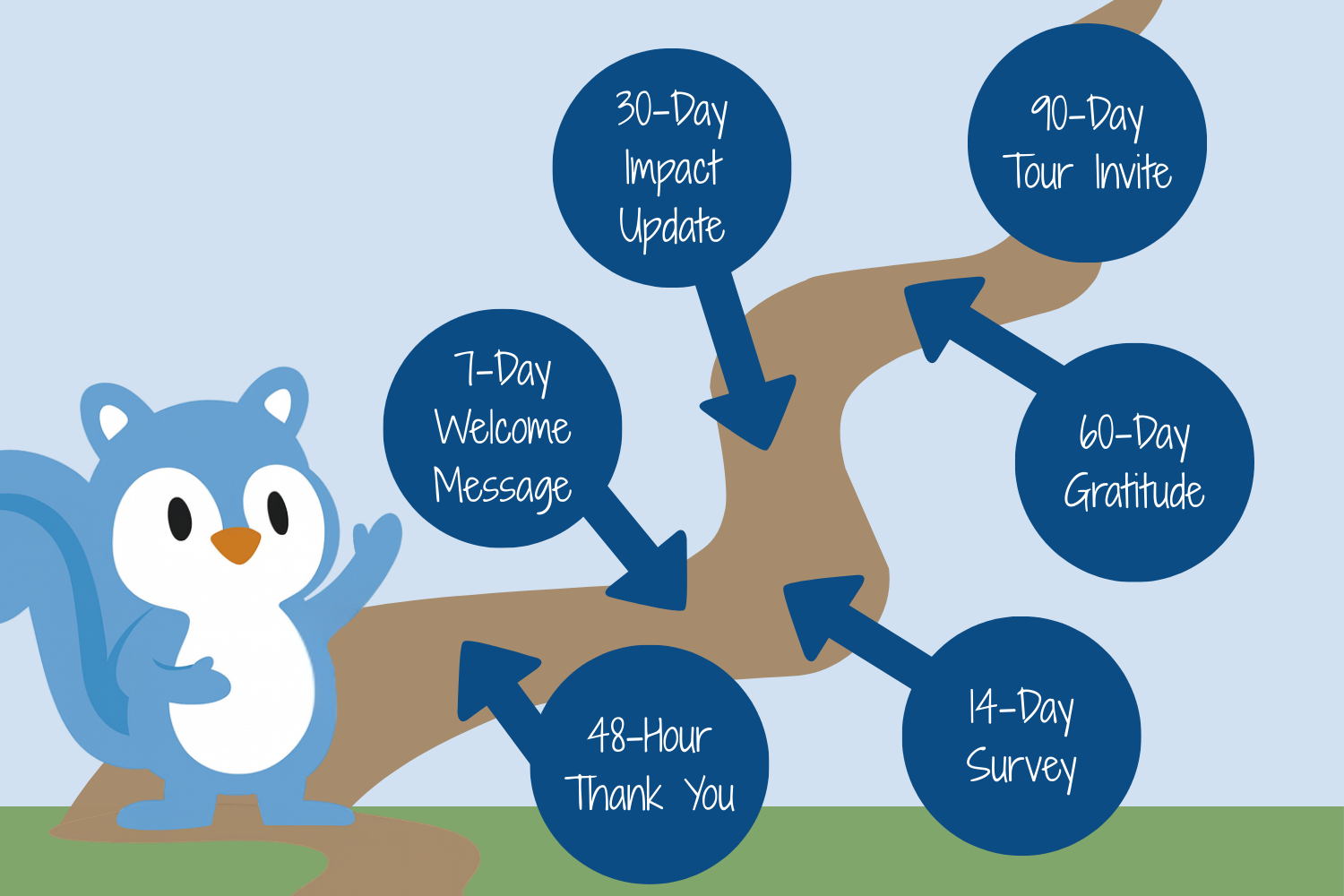
- 48-Hour Thank-You: Send a personalized note within two days. Use their name, mention their gift amount, and tie it directly to an outcome.
Ex: “Zahra, thank you for your gift yesterday! It helped stock our community fridge for the week!” - 7-Day Welcome Message: Follow up with a warm “Here’s who we are” email. Remember, donors don’t give to organizations; they give to missions. Remind them of why they chose yours!
- 14-Day Survey: Email them a one question survey to let them know they have a voice in your organization and remind them why they gave.
Ex: “Which program do you care about most?” - 30-Day Impact Update: Share a photo or story showing their contribution in action.
- 60-Day Gratitude: Share a thank-you letter or drawing from a program recipient, even if it’s just a scanned copy. Remind them their donation impacted REAL people!!
- 90-Day Tour: Invite the donor to see your space, hear about the mission and see their dollars at work.
Once they donate again, they become Returning Donors, with a retention likelihood skyrocketing to 60%!
Returning Donors
- 48-hour Thank-You: A handwritten note to thank them – and let them know you noticed it wasn’t the first time!
- Anniversary Message: Send out a reminder of the first time they gave, along with a thank you and mission restatement to remind them why they gave the first time.
- Impact Update: Acknowledge the impact their last gift had on your mission.
Event/Annual Donors
- 48-Hour Thank-You: Yep, another handwritten note!
- “Behind the Scenes” Intro – Send a short story or photo of your team prepping for the program or event they’re part of.
- Usual Giving Window/Event Reminder: Send out reminders in the months ahead of the event, acknowledging their past involvement or contributions.
- Program-Specific Event Invites: Invite donors to behind-the-scenes tours or inaugural events so they can see their donation manifest and touch lives.
Ex: “Because of your major contribution to the Scholarship Fund, three families have already been awarded scholarships. Please join us at the scholarship luncheon!” - Personalized Future Opportunity Invite – “You helped with our spring drive—want to see what we’re planning next?”
Recurring/Monthly Giving Donors
- Quarterly Gratitude Email: Summarize their cumulative impact.
“In just three months, your ongoing support has funded 12 mentorship sessions.” - Annual “Milestone” Thank-You: Celebrate their giving anniversary with a hand-written note or postcard.
- Invitation to Give Feedback – Ask what made their experience meaningful; show that gratitude includes listening.
- Donor Appreciation Event Invite: This doesn’t have to be anything fancy, and it definitely shouldn’t be an “asking” event. Focus on appreciation and interaction with organization leadership.
- Behind-the-Scenes Update: Send exclusive stories or videos once a year that show them insider progress.
- End-of-Year Thank You Note: Instead of sending out that boring tax receipt alone, include a hand-written note. Again, use their name and tie it directly to an outcome.
Ex: “Aaron, we are deeply grateful for your ongoing commitment to (organization name)’s mission! This year, your support of $600 funded sports supplies for 6 kids!”
3. Who Delivers the Touchpoint
Finally, decide who should deliver each interaction.
Some touchpoints work smoothly coming from staff. Others feel stronger coming from leadership. Still others can carry more impact from volunteers. This spreads the work, creates a culture of shared gratitude and provides multiple perspectives???
Your touchpoints are more powerful when the messenger aligns with the message:
- Staff: Fast thank-yous and updates
- Board members: Milestones and second-gift acknowledgements
- Volunteers: Stories, peer encouragement and handwritten notes
- Executive Director: Annual appreciation or big-impact moments
Start Today
A thank-you is good. The right thank-you at the right time, from the right person, is transformational. This is how gratitude becomes a tool for retention and connection.
Meaningful touchpoints are the bridge between gratitude and long-term donor retention. Each well-timed, intentional interaction strengthens connection and reinforces that donors are partners, not just contributors. When donors feel seen, understood and appreciated, they stay—and their loyalty fuels your mission!
Start Today: Choose one Audience Group and map out three touchpoints you can deliver in the next 30 days. Even simple updates, stories, or thank-you messages will build real connection and retention.
Sounds great in theory, but wondering how to make this sustainable? Stay tuned for Part 3 to find actionable tips to share the load and track it all.

Could use some help implementing?
The Blue Squirrel helps nonprofits build touchpoint plans that
deepen connection and improve retention without overwhelming your team.