
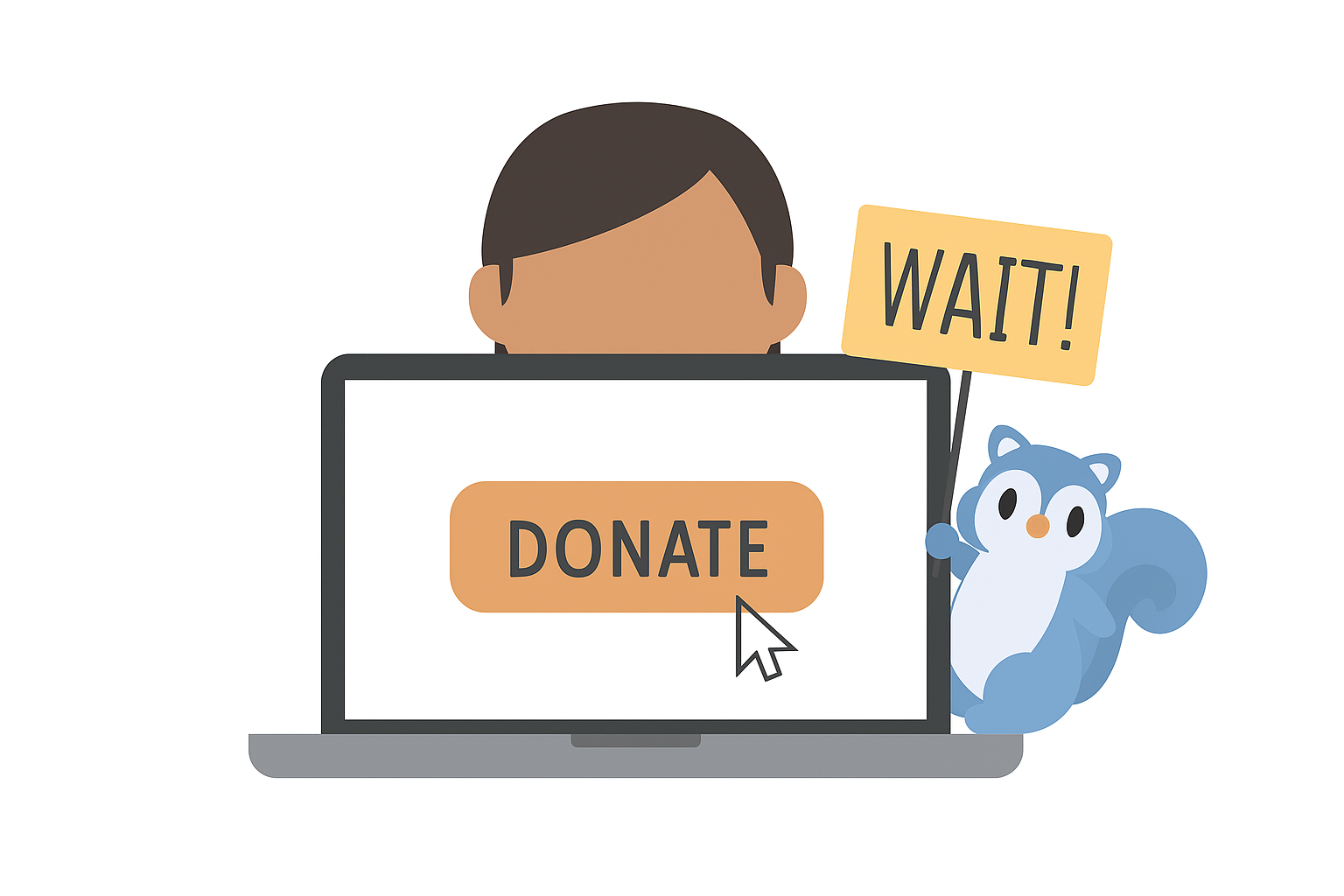
You’ve written the perfect appeal. You’ve got the campaign name, the emails, the goal thermometer ready to go… but before you hit “send,” pause for a moment.
…Is your website actually ready for donations?
A donor’s journey almost always leads through your website — and if it’s confusing, outdated or missing key information, you might be losing gifts before they even happen! Your appeal might be strong, but it’s the donor experience on your site that determines whether that generosity turns into action.
Let’s look at a few small updates that make a big difference in improving donor experience on nonprofit websites, backed by data.
Ready to make some changes, but could use some guidance? The Blue Squirrel specializes in improving donor experience. We can help you analyze and update your nonprofit’s donation page with even more insights!
Contact us to start a smoother, more inspiring journey for your donors.
1. Build Trust Before You Ask for Money
Update your Impact and About pages
75% of donors look for concrete information about a nonprofit’s achievements before making a decision to give. – Root Cause
That’s three out of four people! Before they click “donate,” they’re scanning your site to answer one question: Does this organization actually make an impact?
If your “About” or “Impact” page hasn’t been updated since the last board retreat, start there. Add recent stories, result, and photos of your work in action.
💡 Pro tip: Show outcomes, not just activities. “We held 20 workshops” is good — but “We trained 200 new mentors who now support 500 youth” is better.
Add Charity Rating or Local Distinctions, if you have them
72% of individuals say that the presence of a charity rating badge on a donation page increases their likelihood of giving. – Nonprofit Tech for Good
Badges (like Charity Navigator, Guidestar, BBB, etc.), partner logos, local press mentions — all these act as short-cuts for trust. Embed them on or right near your donation page so donors don’t have to go hunting.
2. Offer to Cover Processing Fees
55% of online donors will opt in to pay credit card processing fees. – GoFundMe Pro
That’s right — over half of your supporters want to help your organization keep every dollar possible. Make sure your donation platform gives them that option.
💡 Pro tip: Phrase it in donor-centered language, like:
“Would you like to cover the processing fee so your full gift goes to our programs?”
3. Keep the Donation Process Simple
Every extra click or confusing question can cost you a donor. Aim for a donation form that can be completed in under 60 seconds.
💡 Checklist:
- Limit the form to one page.
- Default to monthly giving, but keep the option clear.
- Include mobile-friendly design (half of all online gifts are made on phones).
4. Say Thank You — Immediately
Donors who receive a thank-you within 48 hours of making a gift are four times more likely to give again. -Guidestar
A confirmation page and automated email are non-negotiable. They reassure donors their gift went through and start the gratitude loop right away.
💡 Pro tip: Use the thank-you page to deepen engagement — share a short video, a story or invite them to join your newsletter.
5. Test Everything Before You Launch
Out yourself in the donor’s shoes! Think donor! Go through your own donation form start to finish (on desktop and mobile). Try different gift amounts. Click every link. If something frustrates you, it will frustrate donors too!
💡 Bonus: Have a board member or friend do a “test gift” and share their honest feedback.
The Bottom Line
This is step one in “thinking donor” to design an intentional, joyful donor experience. When donors can see that their gifts matter — and when giving feels easy, credible and personal — they’re far more likely to hit “donate.”
And hey, if a squirrel can find hundreds of nuts before winter, you can definitely find a few minutes to update your impact page! 🐿️
Your team doesn’t have time to do a website inventory? We’ll handle the details — so your donors have the best experience possible. Contact us!

Sounds great, but I could use help implementing!
We’re here to help. Let’s talk.